Intelligence and governance drive execution, ensuring replenishment decisions align with business objectives — not just inventory thresholds.
Each layer feeds into the next — creating a closed-loop system that self-optimizes over time.
Real-time POS sales, on-hand inventory, in-transit stock, sellable returns, lead times, store grade, and margin data — auto-synced from your ERP.
Demand forecasting, dynamic reorder levels, size-wise allocation, lifecycle adjustments, and network surplus checks at the Store–SKU–Size level.
Margin validation, lifecycle control, OTB budget checks, store-grade rules, and dead-stock conflict resolution — protecting profitability before any action.
DC allocation, inter-store transfer (STO), and purchase order (PO) triggering — seamlessly within your existing operational systems.
From a POS sale to an automated replenishment action — visualized step by step.
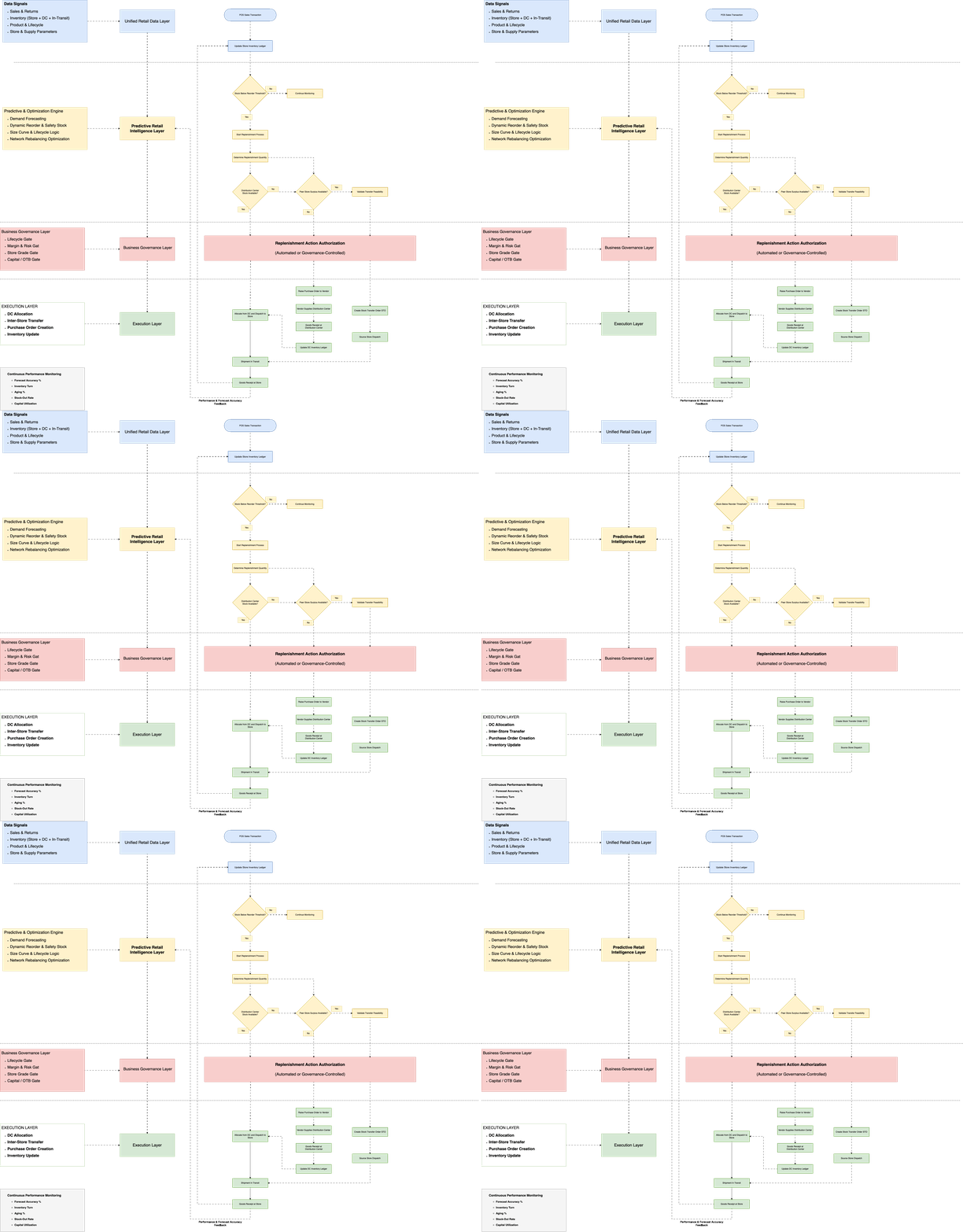
POS transactions update inventory in real time at the store–SKU–size level.
ML models predict demand for the next replenishment cycle based on velocity and patterns.
Reorder levels are recalculated based on projected coverage, not static thresholds.
Surplus is evaluated across the network before any new procurement is triggered.
Lifecycle, margin, and OTB validation ensures every recommendation is business-aligned.
DC allocation, inter-store transfer, or purchase order — triggered with one click.
Measurable impact across stock-outs, dead inventory, and working capital.
